
What Recent Clinical Research Tells Us About Microbiome Diversity and Body Weight
For decades, the dominant explanation for obesity was straightforward: too many calories consumed, too few burned. But a growing body of peer-reviewed research now points to a more complex picture — one in which the trillions of bacteria living in your gut play a central and previously underappreciated role in determining how your body processes food, regulates appetite, manages cravings, and stores or burns fat. This article summarises the current state of that research.
The Core Finding: Your Gut Microbiome and Your Weight Are Linked
The human gut is home to a vast community of microorganisms — bacteria, fungi, viruses, and other microbes — collectively known as the gut microbiome. An adult gut contains roughly 38 trillion bacterial cells, outnumbering human cells by a ratio of at least ten to one. These bacteria are not passive passengers. They participate actively in digestion, immune regulation, hormone production, and metabolic function.
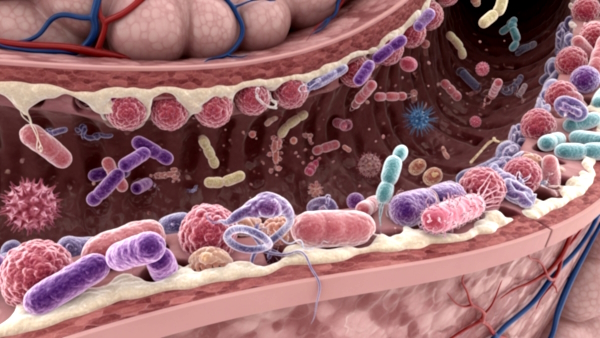
The most significant early evidence linking the gut microbiome to body weight came from a landmark study published in the journal Science in 2013. Researchers at Washington University in St. Louis, led by Dr. Jeffrey Gordon, studied pairs of human twins in which one twin was lean and the other was clinically obese.1 When they analysed the gut microbiomes of each twin pair, a consistent pattern emerged: lean twins had a highly diverse gut microbiome, rich in a wide variety of bacterial species. Obese twins had a gut microbiome that was markedly less diverse — dominated by a small number of bacterial species associated with fat storage and metabolic disruption.
To test whether this difference was causal rather than incidental, the researchers transferred gut bacteria from human twins into germ-free mice that had no gut bacteria of their own. Mice that received bacteria from the obese twin gained significantly more fat than mice that received bacteria from the lean twin — despite consuming identical diets. The gut microbiome alone was sufficient to produce different metabolic outcomes.
A separate analysis published in Nature the same year, drawing on data from the MetaHIT consortium, found that low microbial richness in the gut was consistently associated with increased adiposity, insulin resistance, and systemic inflammation — all markers of metabolic dysfunction.2 These findings were not marginal: individuals with low gut microbiome diversity showed substantially worse metabolic profiles across every measure tested.
A further study published in Genome Biology in 2016, conducted by researchers at King’s College London using data from 3,666 twins, found that heritable components of the gut microbiome were significantly associated with visceral fat levels.3 Visceral fat — the fat stored around the abdominal organs — is metabolically active and associated with elevated cardiovascular and metabolic risk. The study concluded that gut microbiome composition is a meaningful predictor of visceral fat accumulation, independent of other known risk factors.
Taken together, these three large studies establish a consistent picture: gut microbiome diversity is not a peripheral factor in metabolism. It is a central one.
The Anatomy: Where Gut Bacteria Live
To understand how gut bacteria exert metabolic influence, it helps to know where in the digestive tract they are most concentrated. The primary habitat is the cecum — a small, pouch-like organ located at the junction of the small and large intestine, just above the appendix. The cecum is the point at which the digested contents of the small intestine first enter the large intestine, and it is here that the density of microbial colonisation is highest.
The cecum’s role as the primary site of microbial activity means that it functions as something closer to a metabolic relay station than a simple passageway. Bacteria in the cecum ferment dietary fibre, produce signalling molecules that communicate with the brain and immune system, and influence the rate and efficiency of caloric extraction from food. The composition of that bacterial community — which species dominate, and which are present only in small numbers — has downstream consequences throughout the body.
Four Pathways: How an Imbalanced Gut Microbiome Disrupts Metabolism
Research now identifies at least four distinct biological pathways through which a low-diversity, metabolically unfavourable gut microbiome can contribute to weight gain. These pathways do not operate in sequence — they operate simultaneously, and they interact with one another in ways that tend to compound the effect over time.
1. Appetite Regulation: The Leptin Connection
Leptin is the hormone responsible for signalling to the brain when the body has consumed enough food. When leptin signalling functions normally, eating triggers a rising leptin level that eventually tells the brain to stop — producing the sensation of satiety. Research published in Diabetes, Metabolic Syndrome and Obesity in 2012 identified a mechanism by which dietary patterns that feed metabolically unfavourable bacteria can contribute to leptin resistance — a state in which the brain stops responding appropriately to leptin’s satiety signal.4
The practical consequence of disrupted leptin signalling is persistent hunger. The brain continues to register a need for food even after caloric needs have been met, producing a consistent, low-grade caloric surplus that accumulates as body fat over time. This is not a failure of willpower. It is a physiological disruption of the biological system designed to prevent overconsumption.
Supporting research from Lund University, published in 2018, further demonstrated a direct link between gut bacteria composition and appetite-regulating mechanisms, identifying the gut microbiome as an active participant in the regulation of hunger signals — not merely a passive bystander.5
2. Craving Manipulation: The Vagus Nerve Connection
The vagus nerve is the primary communication channel between the gut and the brain. It transmits signals in both directions, and research has demonstrated that gut bacteria are capable of influencing the signals sent along this pathway.
A 2014 review published in BioEssays examined the mechanisms by which gut microorganisms may influence eating behaviour through neural, hormonal, and immune pathways.6 The authors concluded that gut bacteria have the capacity to manipulate host food preferences in ways that favour their own survival — specifically by promoting cravings for the foods that allow them to thrive and reproduce. For metabolically unfavourable bacterial species, these foods are typically high in sugar, fat, and processed carbohydrates.
A complementary study published in Cell Metabolism in 2016 found that commensal gut bacteria directly activate host satiety pathways following nutrient-induced bacterial growth — demonstrating that the gut microbiome participates actively in appetite signalling, not just passively in digestion.7
Research from Baylor College of Medicine published in 2019 further described how the gut-brain connection, mediated in part through vagal nerve pathways, plays a role in how overeating leads to obesity — with gut bacterial activity identified as a contributing factor in disrupting normal satiety responses.8
The implications are significant. Cravings for highly processed, calorie-dense foods may not be a simple matter of preference or habit. They may reflect, at least in part, signalling from the gut microbiome — making them genuinely difficult to override through conscious effort alone.
3. Fat Storage Signalling: The Inflammation Connection
A low-diversity gut microbiome dominated by metabolically unfavourable bacteria is associated with increased intestinal permeability and elevated gut inflammation. Research published in the journal Diabetes in 2007 identified a mechanism called metabolic endotoxemia — in which bacterial components from a disrupted gut microbiome enter systemic circulation and trigger low-grade inflammatory responses — as a driver of both obesity and insulin resistance.9
The body’s response to sustained inflammation includes a shift in metabolic priority: away from burning stored fat for energy and toward storing fat as a conservational response to perceived physiological stress. This fat-storage bias can persist as long as the underlying inflammatory signal continues — which, in the context of a chronically imbalanced gut microbiome, may be indefinite.
Research from the Technical University of Denmark, published in 2016, identified gut bacteria composition as a significant factor in the regulation of host metabolism, with low-diversity microbial communities consistently associated with elevated fat storage and reduced metabolic efficiency.10
4. Metabolic Rate Reduction: The Caloric Extraction Connection
Gut bacteria influence not only what signals the body receives, but how it physically processes food. Different microbial communities extract calories from food at different rates and efficiencies. A gut microbiome dominated by certain bacterial species tends to extract more calories from each unit of food consumed and to slow the rate at which food moves through the digestive system.
Research published in Frontiers in Physiology in 2019 reviewed the mechanisms by which gut microbiome composition influences host metabolism through the regulation of gut hormone release — including hormones that govern metabolic rate, fat storage, and energy expenditure.11 The finding that the gut microbiome actively participates in regulating these hormonal systems adds a further layer of complexity to the relationship between microbial diversity and body weight.
The net effect of these four pathways operating simultaneously is a biological environment in which gaining weight is made easier and losing it is made harder — not primarily through the choices a person makes, but through the metabolic conditions created by an imbalanced gut microbiome.
The Reinforcement Cycle: Why the Imbalanced State Tends to Persist
One of the more challenging features of gut microbiome imbalance as a metabolic factor is that it is, to a significant degree, self-perpetuating. The bacterial species associated with metabolic disruption thrive on the same foods whose consumption they promote — high-sugar, high-fat, heavily processed carbohydrates. As these species multiply, they strengthen the signals that drive cravings for those foods. As consumption of those foods increases, the species multiply further. The result is a reinforcing loop that becomes progressively harder to interrupt through dietary willpower alone.
The research referenced above from BioEssays (Alcock et al., 2014) describes this dynamic explicitly — noting that microorganisms with a fitness advantage in a particular dietary environment have both the capacity and the evolutionary incentive to promote host behaviours that sustain that environment.6
The same reinforcement dynamic applies in reverse: as microbial diversity improves, appetite regulation tends to normalise, cravings for processed foods tend to moderate, and the metabolic conditions that favour fat storage begin to shift. This is the basis for the emerging research focus on microbiome restoration as a metabolic intervention.
The Transplant Evidence: A Natural Controlled Experiment
Among the most striking pieces of evidence for the gut microbiome’s causal role in weight gain is a case study reported in Open Forum Infectious Diseases in 2015.12
A woman with a healthy body weight underwent a fecal microbiota transplant — a procedure in which gut bacteria from a donor are transferred to a recipient — as a treatment for a recurrent Clostridium difficile infection. The procedure, while unconventional, is clinically recognised as highly effective for drug-resistant C. difficile infections. In this case, the donor was the patient’s adult daughter, who was clinically obese.
The transplant resolved the infection. It also, over the following months, produced a dramatic and unexpected change in the patient’s body weight. Despite following a medically supervised diet and exercise programme, the patient gained 34 pounds within twelve months of the procedure and became clinically obese — a condition she had not experienced at any point prior to the transplant.
The significance of this case is that it constitutes a near-controlled natural experiment. The only material variable that changed was the composition of the patient’s gut microbiome, which shifted from her own diverse, lean-associated microbial community to one derived from a clinically obese donor. The resulting weight gain, occurring under conditions of active dietary management, is difficult to explain through any mechanism other than the transfer of a metabolically unfavourable gut microbiome.
The researchers noted that this case raises important questions about donor selection in fecal transplant procedures — and, more broadly, about the degree to which the gut microbiome functions as a causal factor in obesity rather than a correlational one.
Population Evidence: The Japanese Paradox
While laboratory and clinical evidence makes a strong mechanistic case for the gut microbiome’s role in weight regulation, population-level data provides a different kind of support — one that demonstrates the effect at scale, across millions of individuals, over long periods of time.
Japan has consistently recorded the lowest obesity prevalence among developed nations — approximately 3.6% of the adult population, compared to 42.4% in the United States. This gap persists despite the widespread adoption of Western dietary habits in Japan, including consumption of fast food and processed foods at rates that might be expected to produce Western-equivalent rates of obesity.
Researchers have proposed that a significant part of this difference is attributable to the traditional Japanese dietary practice of consuming fermented foods — miso, natto, and tsukimono, among others — that supply diverse lean-supporting bacterial species to the gut. These foods have been a staple of Japanese diets for centuries, and their probiotic properties may help maintain the microbial diversity that the research literature associates with healthy weight regulation.
The Nagano prefecture — where fermented food consumption is particularly high and has been for generations — records the lowest obesity rate in Japan. This pattern does not prove causation, but it is consistent with the mechanistic hypothesis that sustained dietary support for lean-supporting gut bacteria produces population-level metabolic benefits.
Lean-Supporting Bacterial Strains: What the Research Shows
A growing body of clinical research has examined specific bacterial strains for their potential to support healthy metabolic function. Three strains in particular have accumulated meaningful evidence.
Lactobacillus gasseri has been studied in a randomised controlled trial published in the British Journal of Nutrition in 2013.13 Participants consuming fermented milk containing L. gasseri SBT2055 showed significant reductions in abdominal adiposity over the course of the study — including reductions in visceral fat, subcutaneous fat, waist circumference, and hip circumference. The researchers attributed these effects to the strain’s activity in the gut microbiome. When consumption ceased, the reductions partially reversed, suggesting the effect was dependent on ongoing microbial presence rather than a one-time intervention.
Lactobacillus rhamnosus was the subject of a clinical study conducted at Université Laval, published in 2014.14 The study examined the effect of L. rhamnosus supplementation on body weight in overweight men and women over a 24-week period. Women in the supplementation group lost significantly more weight during the active phase of the study than women in the placebo group and continued to lose weight during a maintenance phase, while the placebo group plateaued. The researchers concluded that L. rhamnosus supplementation, in combination with a calorie-restricted diet, produced meaningful and sustained weight management outcomes in women.
Lactobacillus fermentum was examined alongside Lactobacillus amylovorus in a study published in the Journal of Functional Foods in 2013.15 Healthy adults who consumed yoghurt containing either strain over a six-week period showed reductions in body fat percentage relative to a control group. The researchers found that gut microflora composition shifted in participants consuming the probiotic strains, and attributed the reduction in adiposity to these microbiome changes.
It is important to note that the evidence base for specific probiotic strains and weight management, while growing, is still developing. These studies represent meaningful signals rather than definitive proof. Effect sizes varied across trials, and individual responses to microbial interventions are influenced by existing gut microbiome composition, dietary context, and other factors. The research directions are promising; the clinical picture is not yet complete.
Green Tea and the Gut Microbiome
Green tea has been the subject of separate but complementary research examining its effects on gut microbiome composition. A study published in the Journal of Functional Foods in 2020 found that preventive consumption of green tea over time modified gut microbiome composition in ways associated with protection from the effects of a high-fat diet.16 Participants showed persistent shifts in microbial diversity that were associated with reduced fat accumulation relative to controls.
A further study published in Scientific Reports in 2019 examined the effects of green tea supplementation on gut microbiome composition over a seven-day period, finding significant shifts in microbiome and metabolome profiles consistent with improved metabolic function.17
A broader review published in Nutrients in 2019 examined the mechanisms by which tea compounds interact with the gut microbiome, noting that polyphenols in green tea selectively support the growth of beneficial bacterial species while inhibiting the growth of others — suggesting a prebiotic-like modulating effect on gut microbial composition.18
One formulation that has received direct clinical study is Green Select Phytozome — a green tea extract produced using a delivery technology designed to improve absorption of the active polyphenol compounds. A clinical trial published in Alternative Medicine Review in 2009 examined Green Select Phytozome as an adjunct to a low-calorie diet in participants with obesity.19 The supplementation group lost significantly more weight than the diet-alone control group over the course of the study — 14 kg versus 4 kg — suggesting that the green tea extract produced metabolic effects beyond those attributable to caloric restriction alone. The researchers proposed that the extract’s influence on metabolic rate and fat oxidation contributed to the additional weight loss observed.
The Delivery Challenge: Why Strain Viability Matters
A practical consideration in any discussion of gut bacteria and metabolic health is the challenge of delivering live bacterial strains to the gut in viable form. The bacteria must survive passage through the highly acidic environment of the stomach before they can reach the cecum and large intestine, where their activity is relevant.
Conventional capsule formulations do not reliably protect bacterial strains through this process. Stomach acid degrades many bacterial species before they can reach their target site, reducing or eliminating the potential benefit. Research examining probiotic supplementation outcomes has noted significant variability in results between studies, and differences in bacterial survival rates during transit are one proposed explanation for this variability.
Delayed-release capsule technology — in which the capsule is specifically engineered to resist dissolution in stomach acid and release its contents only once it reaches the more hospitable environment of the lower gut — addresses this challenge. Studies that have used such delivery systems in examining specific strains have generally reported stronger outcomes than studies using standard capsule formulations, though direct comparative data between delivery methods remains limited.
Where the Research Currently Stands
The relationship between gut microbiome diversity and metabolic health is one of the most active areas of biological research. The body of evidence has grown substantially in the last fifteen years, and the direction it points is consistent: gut microbiome composition is a meaningful driver of metabolic function, and low microbial diversity is associated with conditions that favour weight gain and resist dietary intervention.
What remains less settled is the precise degree to which microbiome-targeted interventions — dietary, probiotic, or otherwise — can reliably produce and sustain meaningful changes in metabolic outcomes across diverse populations. Individual responses to microbial interventions vary. The interactions between different bacterial species, diet, genetics, and environment are complex. Research that looks promising in controlled trial conditions does not always translate uniformly to real-world settings.
What the research does support is the conclusion that the gut microbiome deserves serious consideration as a factor in weight management — not as a replacement for established principles of diet and physical activity, but as a biological context within which those principles operate. For individuals who have followed conventional weight management approaches without achieving lasting results, the evidence increasingly suggests that addressing gut microbiome health may be a meaningful and scientifically grounded part of the picture.
If you arrived at this article from your quiz results and want to explore one specific approach to gut microbiome rebalancing that draws on this research, you can find more information here: Learn more about the approach covered in your quiz results.
References
- Ridaura VK, Faith JJ, Rey FE, et al. Gut microbiota from twins discordant for obesity modulate metabolism. Science. 2013 Sep 6. doi:10.1126/science.1241214
- Le Chatelier E, Nielsen T, Qin J, et al; MetaHIT consortium. Richness of human gut microbiome correlates with metabolic markers. Nature. 2013;500(7464):541–546. doi:10.1038/nature12506
- Beaumont M, Goodrich JK, Jackson MA, et al. Heritable components of the human fecal microbiome are associated with visceral fat. Genome Biol. 2016;17(1):189. doi:10.1186/s13059-016-1052-7
- Spreadbury I. Comparison with ancestral diets suggests dense acellular carbohydrates promote an inflammatory microbiota, and may be the primary dietary cause of leptin resistance and obesity. Diabet Metab Syndr Obes. 2012;5:175–189.
- Lund University. “New link between gut bacteria and obesity.” ScienceDaily, 23 February 2018.
- Alcock J, Maley CC, Aktipis CA. Is eating behavior manipulated by the gastrointestinal microbiota? Evolutionary pressures and potential mechanisms. Bioessays. 2014;36(10):940–949. doi:10.1002/bies.201400071
- Breton J, Tennoune N, Lucas N, et al. Gut commensal E. coli proteins activate host satiety pathways following nutrient-induced bacterial growth. Cell Metab. 2016;23(2):324–334. doi:10.1016/j.cmet.2015.10.017
- Baylor College of Medicine. “Gut-brain connection helps explain how overeating leads to obesity.” ScienceDaily, 12 August 2019.
- Cani PD, Amar J, Iglesias MA, et al. Metabolic endotoxemia initiates obesity and insulin resistance. Diabetes. 2007;56(7):1761–1772. doi:10.2337/db06-1491
- Technical University of Denmark (DTU). “Gut bacteria affect our metabolism.” ScienceDaily, 21 November 2016.
- Martin AM, Sun EW, Rogers GB, Keating DJ. The influence of the gut microbiome on host metabolism through the regulation of gut hormone release. Front Physiol. 2019;10:428. doi:10.3389/fphys.2019.00428
- Alang N, Kelly CR. Weight gain after fecal microbiota transplantation. Open Forum Infect Dis. 2015;2(1). doi:10.1093/ofid/ofv004
- Kadooka Y, Sato M, Ogawa A, et al. Effect of Lactobacillus gasseri SBT2055 in fermented milk on abdominal adiposity in adults in a randomised controlled trial. Br J Nutr. 2013 Nov 14. doi:10.1017/S0007114513003875
- Université Laval. “Certain probiotics could help women lose weight, study finds.” ScienceDaily, 28 January 2014.
- Omar JM, Chan YM, Jones ML, Prakash S, Jones PJH. Lactobacillus fermentum and Lactobacillus amylovorus as probiotics alter body adiposity and gut microflora in healthy persons. J Funct Foods. 2013;5(1):116–123.
- Zhu J, Cai R, Tan Y, et al. Preventive consumption of green tea modifies the gut microbiota and provides persistent protection from high-fat diet-induced obesity. J Funct Foods. 2020;64. doi:10.1016/j.jff.2019.103651
- Jung ES, Park JI, Park H, et al. Seven-day green tea supplementation revamps gut microbiome and caecum/skin metabolome in mice from stress. Sci Rep. 2019;9:18418.
- Bond T, Derbyshire E. Tea compounds and the gut microbiome: findings from trials and mechanistic studies. Nutrients. 2019;11(10):2364. doi:10.3390/nu11102364
- Di Pierro F, Menghi AB, Barreca A, Lucarelli M, Calandrelli A. Greenselect Phytosome as an adjunct to a low-calorie diet for treatment of obesity: a clinical trial. Altern Med Rev. 2009;14(2):154–160.
- Norris V, Molina F, Gewirtz AT. Hypothesis: bacteria control host appetites. J Bacteriol. 2013;195(3):411–416. doi:10.1128/JB.01384-12
- Frayn KN. Visceral fat and insulin resistance — causative or correlative? Br J Nutr. 2000;83 Suppl 1:S71–77. doi:10.1017/s0007114500000982
Disclaimer: The studies referenced in this article were conducted under controlled clinical or laboratory conditions. Results reported reflect findings from those specific research contexts and do not imply that individuals reading this article will experience similar outcomes. This article is for informational purposes only and does not constitute medical advice. If you have concerns about your weight or metabolic health, please consult a qualified healthcare professional.